Today
R
Reference model
Renault Zoe
- Range
- 315 km*
- Battery
- 52 kWh
- DC charging
- 41 kW
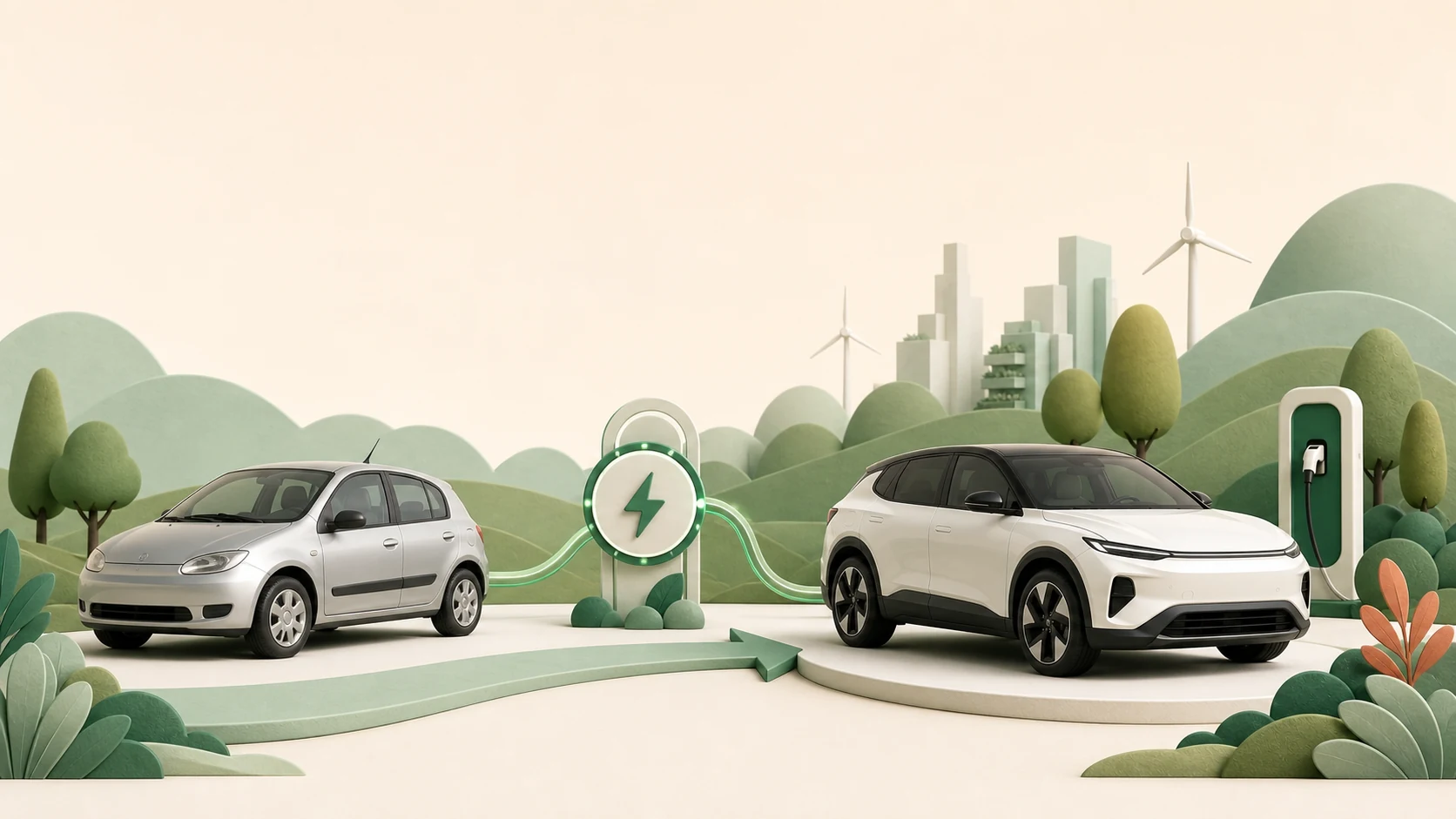
EV switching guide
Change carsComing from a Renault Zoe?
A practical answer based on range, charging, compatible stations, running costs and the features you use every day.
Reference model
Reference model
If your battery still covers your daily loop comfortably, keeping the Zoe ZE50 R110 is rational. Switch when charging or range starts deciding where you can go.
Quick answer
Meaningful upgradeThe Renault Megane E-Tech EV60 brings several practical improvements. It makes most sense if those changes solve problems you already feel with the Renault Zoe.
Range per charge
Current · Zoe ZE50 R110
315 km
New · Megane E-Tech EV60
380 km
65 km more range
10–80% charging
Current · Zoe ZE50 R110
53 min
New · Megane E-Tech EV60
32 min
21 min less waiting
Charging stops on a 600 km day
Current · Zoe ZE50 R110
2 stops
New · Megane E-Tech EV60
2 stops
Same number of breaks
Your result
Start with what improves, then check the trade-offs and what will still feel familiar.
Nothing significant — the two cars match here.
Side by side
Your Zoe ZE50 R110
Megane E-Tech EV60
*Estimated mixed-condition real-world range. Missing database values are omitted or marked unavailable.
For you, the owner
A specification only matters when it changes your routine. Here is how moving from your Renault Zoe to the Renault Megane E-Tech EV60 translates into ordinary weeks, longer journeys and the habits you already have.
Your normal week
You gain about 65 km of estimated real-world range, so you can leave a larger buffer instead of watching the remaining percentage as closely. At the same €0.30/kWh home tariff, the estimate is about €21 less per 10,000 km.
Beyond the daily commute
A 600 km day still needs about 2 charging stops, so the number of breaks should feel familiar. For a 10–80% top-up, the estimates move from roughly 53 minutes in the Zoe ZE50 R110 to 32 minutes in the Megane E-Tech EV60 under the stated charging assumptions. Compatible-station coverage is unchanged, so every charging location counted for your current plug remains represented.
Living with the car
Both cars have a heat pump, so efficient winter cabin heating remains familiar. Battery preconditioning also means the new car can prepare its pack before a fast-charge stop on cold days. You keep the same 5-seat capacity.
The honest decision
Switch if real-world range, 10–80% fast charge, efficiency solve frustrations you feel regularly. The move should remove a real limitation—not simply put a newer car on the driveway.
Keep the Renault Zoe if it still covers your routine comfortably and its charging stops do not shape your journeys. The data does not reveal a major penalty for keeping it. Some Renault Zoes are now around 13 years old, but age alone is not a reason to replace a healthy battery.
Charging
Compatible-location counts come from PlugSphere’s charging-station database and each reference car’s stored plug standard.
Check a route with the Megane E-Tech EV60 →Today
144,123
compatible charging locations
After switching
144,123
compatible charging locations
DC fast locations are matched at 50 kW or more. Counts change as the station database is refreshed.
Your Renault Zoe today
The oldest Renault Zoes are now ~13 years old. Fleet telemetry puts typical degradation at 1.5–2% per year — the bands below apply that to each version's original range.
*PlugSphere estimates; actual battery health varies with climate and charging habits. We never estimate used-car prices.
Money
Running-cost estimates use the same €0.30/kWh home tariff for both cars. Purchase prices appear only where a current market record exists.
Home energy · 10,000 km
Zoe ZE50 R110
€495
Megane E-Tech EV60
€474
Current Megane E-Tech EV60 prices
Answers computed from both cars' data.
If range or charging speed limits you, the data shows you gain 65 km of real-world range and a 10–80% stop of about 32 minutes. If your Zoe ZE50 R110 still covers your daily loop comfortably, keeping it is a rational choice.
Real-world range, 10–80% fast charge, Efficiency.
The oldest Renault Zoes are now about 13 years old and have typically lost 1.5–2% of range per year. The case for switching starts when you charge to 100% daily just to feel safe, or when fast-charging stops dictate your routes.
Next steps
Use the route you actually drive, then inspect the full reference-car record. That will tell you more than another generic best-EV list.